AI founder avatar: when it works and when it hurts
A digital twin saves shoot days and speaks other languages. It backfires when viewers feel misled. Here is how to tell which will happen for you.
 Magnet Minds
4 November 2026
9 min read
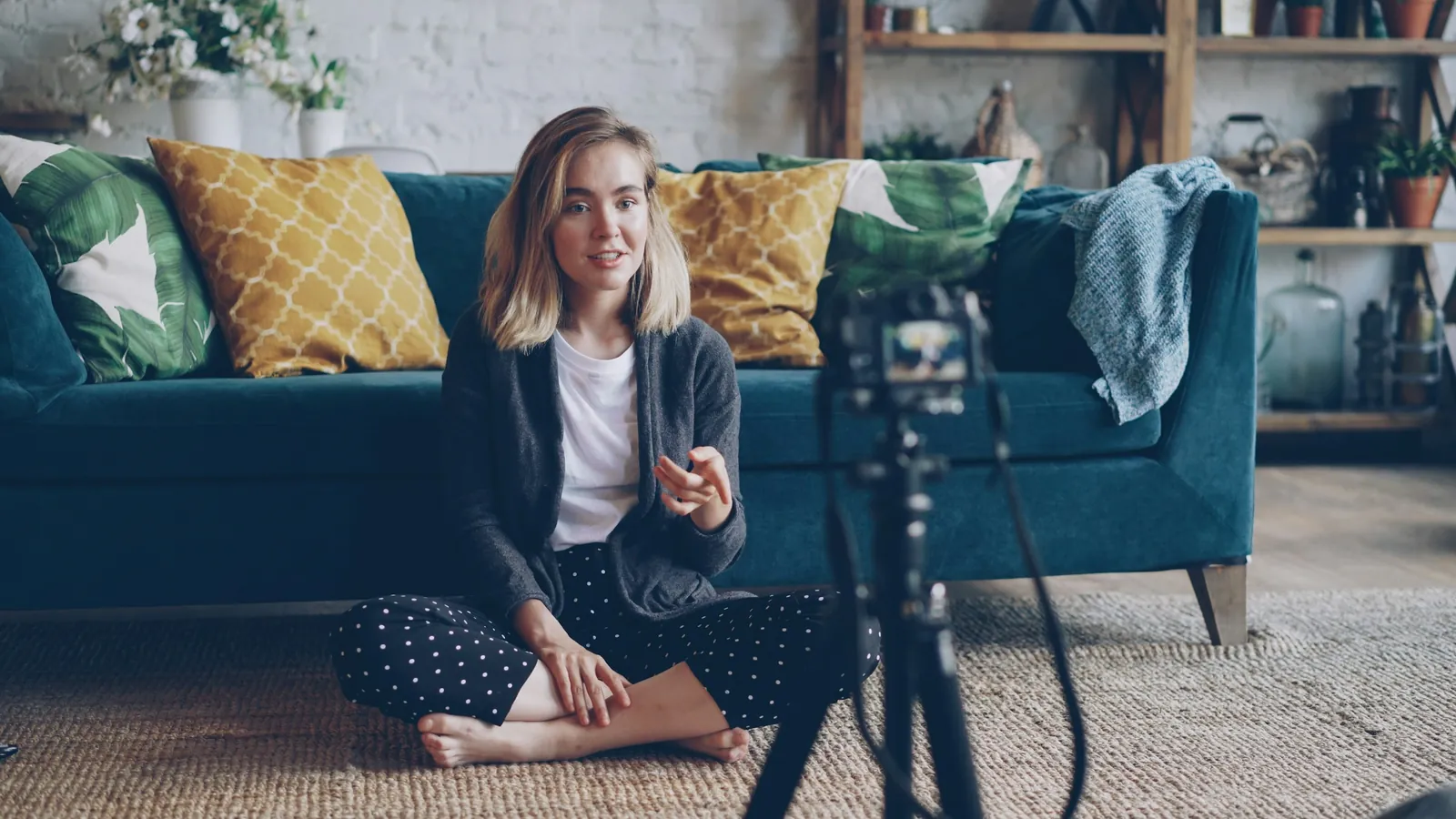 Photo: Vitaly Gariev, Unsplash, Unsplash License
An AI founder avatar is a digital twin: a video model of a real person, trained on a short recording of their face and voice, that then says any script you write. It works for many versions of one ad, for other languages and for explainer videos. It hurts when viewers do not realise they are watching AI, and when the topic needs the actual person.
- HeyGen now builds a digital twin from about 30 seconds of continuous footage and requires a separate consent video from the same person.
- The strong uses: many openings to test, language versions, product explainers, answers to common questions.
- Since 2 August 2026, the EU AI Act requires realistic deepfake videos to be disclosed as artificially generated, at the latest at the viewer's first exposure.
- TikTok rejects or restricts ads with undisclosed AI content. Meta adds an AI label when it detects it.
- Record apologies, personal stories and a new brand's first ad with the real person.
What is an AI avatar, and how is one made today?
People use "AI avatar" for three different things. The difference matters, because the rights and risks differ.
| Type | What it is | What to watch |
|---|---|---|
| Stock avatar from a library | an actor whose face the platform has licensed | the same face may appear in other brands' ads |
| Digital twin of a real person | a model trained on footage of the founder or an employee | consent, a contract, an "AI" label |
| Fully generated character | a person who does not exist | still a realistic AI human, so it gets disclosed |
How a twin is made today, per HeyGen's guide updated on 20 October 2026: about 30 seconds of continuous 1080p footage at 30 fps or higher, face visible, no cuts. Separately, the person records a short live consent clip reading a code off the screen. Screen recordings and AI clips fail verification. The current model is Avatar V, a twin is ready in 10 to 20 minutes, and paid plans support 177+ languages and dialects with lip sync. Bulgarian is on the video translation list. Synthesia also requires consent for avatars and moderates content at the point of creation.
At mAInds, the AI founder avatar has been one of our formats since November 2026. That is why this article covers both the upside and the places where we tell clients not to use one.

When does a founder avatar work?
It works when the task repeats and the content matters more than the moment. You record once, then you write scripts.
- Many openings to test. The founder records once and the twin delivers 10 different first lines. You test what stops people without 10 takes.
- Other languages. The same video in Romanian, Greek or German, with lip sync. For a brand entering a new market, that saves whole shoot days.
- Explainers and FAQs. "How do I care for it", "how do I return it", "which size should I pick". Short answers with the brand's face.
- News that dates fast. A new price, a new product, a delivery change. You update the script with no camera crew.
- Training and internal videos. New hires hear from the founder even while they travel.
Our own example: in November 2026 we made an ad in which the AI twin of Iliyan from Magnet Minds says, in Bulgarian, roughly: "We made this ad overnight. No camera. No studio. And without me. I'm Iliyan's AI twin. The real one is having coffee." The "AI" label is visible from the first frame. The idea rests on openness: it looks real even when the viewer knows.
When does an avatar hurt?
It hurts in three cases: when it looks almost real but not quite, when people feel misled, and when the topic needs the actual person.
The uncanny valley. Japanese roboticist Masahiro Mori described the effect back in 1970: when something looks almost human, a small flaw disturbs more than obvious fiction. His example was a prosthetic hand that looks real at first glance and triggers "an eerie sensation" once we realise it is artificial. With avatars, the giveaways are the eyes, the hands, emotion that lags behind the words, and wrong word stress in smaller languages such as Bulgarian.
Trust. A study by Koning and Voorveld in the Journal of Interactive Advertising (2025, 304 participants) found two effects of an "AI-generated" disclosure. Through one path, trust in the ad and the company dropped. Through another it rose, because viewers valued the openness. Our reading: an open label lowers the risk that people feel misled, and that protects trust.
The topic. An avatar hurts when viewers want to know the person stands behind the words:
- an apology or crisis communication;
- the founder's personal story, why they started the brand;
- a review or endorsement in which the twin talks like a customer;
- health, money and children, where words carry responsibility;
- any video in which the twin passes itself off as the real person without a label.
Platforms are already watching. Meta says it detects ads made with third-party AI tools and applies an "AI info" label, and when its own tools add a photorealistic human, the label sits next to "Sponsored". TikTok requires AI content in ads to be disclosed and says undisclosed ads get rejected or restricted. TikTok also bans misusing a public figure's likeness or voice without permission.
What do the EU AI Act and image and voice rights say?
The EU AI Act defines a deep fake as AI-generated or manipulated image, audio or video content that resembles existing persons, objects, places or events and would falsely appear authentic. A twin of a real founder fits that definition. Article 50(4) requires the deployer, meaning the brand that uses the system and publishes the content, to disclose that it has been artificially generated or manipulated. Article 50(5) requires this to be clear and distinguishable, at the latest at the viewer's first exposure.
The transparency rules apply from 2 August 2026, the European Commission confirms. The only grace period, to December 2026, covers machine-readable marking by providers of generative systems placed on the market before August. The Code of Practice on AI-generated content was finalised on 10 June 2026 and by late July had about 190 signatories. The EU has also created a set of icons for labelling AI-generated content. For artistic and satirical works the law allows lighter disclosure. For advertising, do not rely on that exception.
Consent and rights. A face and a voice are personal data. When they are technically processed in a way that identifies the person, the GDPR calls them biometric data. The consent video proves to the platform that the person agrees to the twin being made. The brand's use of it needs a separate written contract:
- what the twin may say and who approves scripts;
- which channels, markets and languages it is used in;
- for how long, and how the model gets deleted;
- what happens if the founder leaves or sells the company.
Individual countries are moving the same way. In October 2026 Denmark was bringing a bill to parliament that would ban sharing realistic deepfake imitations of a person's face and voice without consent, with a planned start in 2027. Treat this as a practical framework and take legal advice on the contract itself. More on rights in AI video is in our article on AI video rights.
When does a real recording beat an avatar?
The rule: when the point is the person being there, record the person. When the point is information, the twin is faster.
| Situation | Better | Why |
|---|---|---|
| A new brand's first ad | real recording | people do not know the face yet; the first impression has to be genuine |
| The founder's story | real recording | the personal part is the content |
| Apology, crisis | real recording | responsibility cannot be delegated |
| Same-day reaction to news | real recording on a phone | a minute of work, full authenticity |
| 10 openings of one ad for testing | avatar | no 10 takes |
| The same video in 3 languages | avatar | lip sync with no new shoot |
| Instructions and FAQs | avatar | easy to update |
| Product in hand, movement, demo | real recording or a generated scene | the twin is trained on a static shot and is strongest talking to camera |
How do you record the training footage? A checklist
A twin's quality depends almost entirely on the recording. The first six points follow HeyGen's guide, the rest come from our own work.
- Camera at eye level, 1080p, 30 fps or more, one continuous take with no cuts. HeyGen asks for about 30 seconds. Record more so you have a choice.
- Even light. Face a window or a soft lamp. Switch off fans and air conditioning for clean sound.
- Plain clothes with no large logos or busy patterns.
- No walking or sharp head movement. The twin's gestures come from this clip, so be a little more expressive than feels natural.
- Voice in a quiet room, with natural energy, not a flat read.
- Consent video: the person, live, reading the code off the screen.
- A contract with the person before the first publication (see above).
- A language test. Run a script with numbers, foreign names and hard words. If the stress drifts, write the line phonetically. For Bulgarian we spell "Black Friday" as it sounds in Cyrillic and write numbers as words. On-screen text stays in normal spelling.
- Different outfits and backgrounds as separate sessions if you plan many videos. Otherwise every ad looks the same.
How do you disclose an AI avatar? An example
Disclose in several places, so the viewer gets it in the first second. An example for a video with a founder's twin:
- On screen from the first second: a small "AI" mark or the EU icon for AI content in a corner.
- On-screen text: "This is the AI twin of [name], founder of [brand]. Created with [name]'s consent."
- In the script: "I'm [name]'s AI twin. The real one is [what they are doing right now]."
- In the platform: on TikTok, switch on "This ad contains AI-generated content". On Meta the label may also appear automatically.
- In the post caption: "This video was made with AI."
The full rules for AI ads from August 2026, including Meta, TikTok and YouTube, are in our article on AI ads and the law.
Never create a twin of someone without their written consent, even a co-founder or employee who "doesn't mind". Platforms check consent for creating the model; using it in ads is something you settle in a contract.
Questions
It is a digital twin: a video model of a real person, trained on a short recording of their face and voice. Once trained, the twin says any script you write, with lip sync and in different languages. Brands use it for ads with many versions, explainer videos and language versions.
HeyGen's October 2026 guide asks for about 30 seconds of continuous 1080p footage at 30 fps or higher, plus a separate consent video in which the same person reads a code off the screen. The twin is ready in 10 to 20 minutes. Record a little more so you can pick the best take.
Yes. Since 2 August 2026, the EU AI Act requires realistic deepfake videos to be clearly disclosed, at the latest at the viewer's first exposure. TikTok rejects or restricts ads with undisclosed AI content. Put an "AI" label on the first frame, mention it in the script and tick the disclosure box in the platform.
Yes. HeyGen supports Bulgarian in video translation, and paid plans cover 177+ languages and dialects. Word stress quality varies, though. Test a script with numbers and foreign names, and if pronunciation drifts, write the line phonetically and spell numbers out as words.
It depends on the contract, so sign one before the first video. Set out how long the brand may use the twin, in which channels and languages, who approves scripts, and how the model is deleted if the founder leaves or sells the company. Without a contract you risk a dispute right when the videos are working.
Want an AI twin of your founder?
Record about 30 seconds of footage using the checklist and a short consent clip. Send a brief. Scripts and key frames reach you within 3 working days. If you do not approve them after 2 revision rounds, we refund the advance. The first videos are ready within 7 working days of approval, and any we deliver late through our fault are free.
See the plans- HeyGen: How to create a digital twin avatar (updated 20 Oct 2026)
- HeyGen Help: Video translation languages we support
- Synthesia: Ethics
- EU AI Act, Art. 50: transparency obligations
- EU AI Act, Art. 3: definitions (point 60, deep fake)
- European Commission: Quick facts, transparency rules for AI systems (29 Jul 2026)
- European Commission: Code of Practice on Transparency of AI-generated Content
- Meta: Expanding GenAI Transparency for Meta's Ads Products
- TikTok Ads Help: Misleading and false content
- TikTok Ads Help: About ad disclaimers in TikTok Ads Manager
- Masahiro Mori: The Uncanny Valley (IEEE Spectrum, 2012)
- Koning & Voorveld: Disclaimer! This content is AI-generated (Journal of Interactive Advertising, 2025)
- GDPR, Art. 4: definitions (point 14, biometric data)
- Euronews: Denmark introduces a bill protecting people's faces and voices from deepfakes (8 Oct 2026)