AI video or a shoot day: which one fits your next ad?
A table of cost, speed and quality, the cases where a camera is still the better call, and hybrid setups that take the best of both.
 Magnet Minds
4 November 2026
8 min read
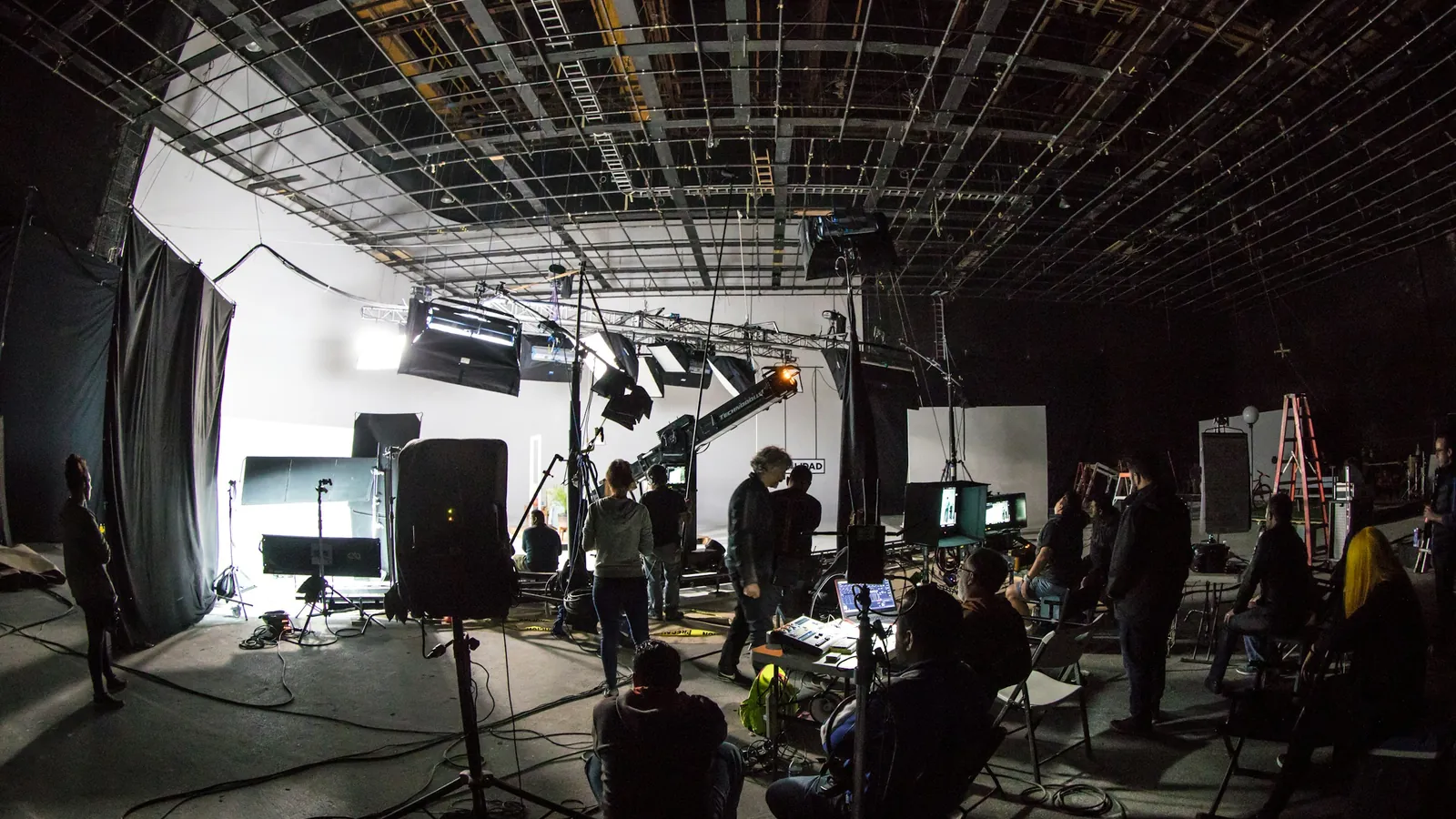 Photo: Brands&People, Unsplash, Unsplash License
For a single short video, AI and a simple studio shoot cost about the same (roughly €150-600 against up to about €460). AI gets several times cheaper once you need several versions, languages or scenes you cannot film, and the first videos arrive in days. A shoot day still wins when you need real faces, a product that must be accurate to the detail, or a celebrity.
- Cost: a short AI video is about €150-600, a short studio video up to about €460, an ad shot with a crew in Bulgaria about €2,560-7,670. The gap grows with every version, language and location.
- Speed: AI delivers first videos in days. A traditional TV ad takes about 9-13 weeks from concept to broadcast.
- A change with AI means regenerating a scene. With a shoot it often means another shoot day.
- Shoot when the person has to be real, the product has to be exact, or a celebrity is in the frame.
- The best answer is often hybrid: a real product or person, with an AI world around them.
How do AI video and a shoot day compare on cost, speed and quality?
Here is the comparison on the criteria that decide a campaign's budget and timeline. Prices exclude VAT. The AI range is our market observation; the other figures come from the sources at the end.
| Criterion | AI video | Shoot day |
|---|---|---|
| Cost of a short social video | about €150-600 | up to about €460 for a short video, €510-1,530 for a simple video with no actors, €2,560-7,670 with crew and studio |
| Time to first video | days | weeks; about 9-13 weeks from concept to broadcast for TV |
| A change after approval | regenerate the scene | often another shoot day |
| Versions for testing | dozens of hooks and variants from one idea | as many as you filmed |
| Impossible scenes | routine work | expensive visual effects |
| Real people | generated faces that must be labelled | real people with a likeness release |
| Product accuracy | needs references and a shot-by-shot check | the product is what it is |
| Celebrities | only with written consent, high risk | a contract with the person |
| Weather, locations, permits | no dependency | rain or a sick actor moves the day |
| Languages and markets | new voice and captions over the same picture | dubbing or new footage |
What are you actually paying for in a shoot day?
A shoot day is many bills added together. Mediatrading's overview of Bulgarian TV production lists script and concept, location scouting, filming with a professional crew, editing and effects, colour grading, sound and music. Film Street adds crew experience, location and music licensing to the price drivers.
In practice the budget covers:
- script, storyboard and prep;
- casting, actor fees and the right to use their faces for an agreed term and set of channels;
- camera operator, lighting, sound recordist, kit;
- location or studio, permits, props, make-up, transport;
- edit, grade, sound design and versions for each format.
With AI video most of those lines disappear. The script, direction, edit and sound remain. Those are exactly the parts that decide whether an ad sells, so in good AI production that is where the budget goes.
When is a shoot day still the better choice?
In four cases the camera wins and earns its cost.
When the face has to be real
The founder talking about the product. The customer describing what they got. The team in the store. If viewers need to believe this is a specific person, film that person. A generated person who passes as real has to be disclosed as AI under Article 50 of the AI Act, and when Meta's own AI tools generate a photorealistic person in an ad, Meta places the AI label next to "Sponsored". A generated "happy customer" with a testimonial also undercuts the trust the ad is trying to build.
When the product has to be exact
The text on the label, the texture of the fabric, exactly how the cap opens. AI models still distort small details. In Coca-Cola's 2025 AI holiday ad, viewers spotted trucks with extra wheels and designs that changed from shot to shot. If your product has a precise look and a precise function, at least the product shots should be real, or generated from many references and checked frame by frame.
When a celebrity is in the frame
An AI copy of a famous person without consent is a brand risk, however easy it is technically. In 2023 Tom Hanks publicly warned that he had nothing to do with a dental plan ad that used an AI-generated likeness of him, and Meta said such ads break its policies. With a contract and explicit consent an AI double is possible, and the contract has to say exactly that.
When "real" is the message
A store opening, an event, the factory floor, a team on the pitch. There the value is that it happened. A generated version of that moment defeats the point of the ad.
When does AI video win?
- Scenes you cannot film, or that need an expensive studio. A pink building in the middle of a motorway, a product floating in zero gravity, cheese in slow motion without a high-speed camera.
- Lots of versions for testing. On Meta and TikTok the winning ads are the ones that went through testing. One idea becomes dozens of hooks without calling the crew back.
- A short deadline. Black Friday, Christmas, a new launch. With under 3 weeks to go, the classic route usually runs out of time. More in AI video for Black Friday and Christmas.
- Several markets and languages. Same picture, new voice and new captions.
- Seasonal variants. One idea in a summer, winter and holiday version.
- Locations outside your budget. A beach at sunset, a rooftop over the city, a museum hall.
How many versions do you need, and what does that mean for the choice?
A shoot day gives you as many versions as you filmed. If a week later you find the opening does not work, a new opening means a new day. But on Meta and TikTok, ads go out in several versions at once to see which one holds people.
Count the files you really need: 3 openings in 2 formats and 2 languages are already 12 videos. With a shoot that is a full day's plan and a lot of editing afterwards. With AI it is one idea generated in several variants. The bigger the number, the stronger the case for AI. To keep those versions from looking like AI, see how to make an AI video that doesn't look like AI.
What does hybrid production look like?
Hybrid mixes real footage and AI in one video. These are the five setups that work most often.
- Real product, AI world. Product photos you already have, or one short product shot, become the base, and AI builds the scene around them.
- Real person, AI footage around them. The founder records 20 seconds on a phone. The rest is generated footage that illustrates what they say.
- An AI avatar of the founder. You record once, give written consent, and the avatar then speaks in new ads, labelled as AI. Details in AI avatar video.
- AI previs before the shoot. Key frames are made with AI and approved, and the crew films only what was signed off. That saves a second shoot day.
- A shoot plus AI versions. One shoot day, then AI variants for other languages, seasons and formats.
How do you decide in two minutes?
Answer these five questions in order. The first "yes" gives you the direction. Five times "no"? Then the budget decides, and prices by type of video are linked below.
- Does a specific real person need to be recognised? If yes: film them, or make an AI avatar with their written consent.
- Does the product need to be shown exactly in motion, say how it opens or what its texture is? If yes: film the product shots or go hybrid.
- Does the event need to be real? If yes: film it.
- Do you need more than 3 versions for testing, or several languages? If yes: AI.
- Are there fewer than 3 weeks until launch? If yes: AI or hybrid.
If the answers point to AI, at mAInds the scripts and key frames arrive for approval within 3 working days and the first videos within 7 working days of script approval. Prices by type of video are in how much an AI video ad costs.
Questions
For one simple video the gap is small. It comes from the versions: 3 openings in 2 formats and 2 languages make 12 files, and with a shoot every extra variant means more time on set and in the edit. With AI you add generations. So the more versions, locations and languages you need, the bigger the gap.
If the direction is weak, yes. The usual giveaways are a face that changes, plastic skin, wrong hands and text that falls apart. Good production catches them at key-frame stage, before any video exists. The full list and method are in our article on making an AI video that doesn't look like AI.
Most of it in preparation. A traditional TV ad takes about 9-13 weeks from concept to broadcast, and casting, locations and crew schedules take weeks of that. With AI those steps drop out and the first videos arrive within days of an approved script. Revisions are faster too, because a new scene means a new generation and no extra shoot day.
Usually, because it adds filming. How much depends on what gets filmed: 20 seconds of the founder on a phone costs almost nothing, while a studio product shot is a separate budget line. Hybrid still comes out cheaper than a full shoot day, because you film only what has to be real.
Yes, and it is often the cheapest hybrid. You keep the filmed footage and add new AI scenes, a seasonal version, another language or a TikTok format. Check the actors' contracts first: do they allow changes to their likeness and use beyond the original term? If not, you need fresh consent.
Should your ad be AI or filmed?
See the offers for campaigns, TV ads and online-store videos. On a call we will tell you what should be AI, what should be filmed and what each one costs.
See the offers- Mediatrading: Колко струва реклама по телевизията
- Film Street: изработка на видео реклама и цени
- IRPR: TV Commercial Production Timeline 2026
- eWeek: Coca-Cola Gets Into AI-Generated Spirit With Holiday Ads
- Storyboard18: Tom Hanks warns people against dental ad using an AI likeness of him
- Meta: Expanding GenAI transparency for Meta's ads products
- AI Act, Article 50: Transparency obligations